PROJECT FOOTAGE / HARRY
FEATURED / ROBOTICS & PLAY
DriverLabby Harry
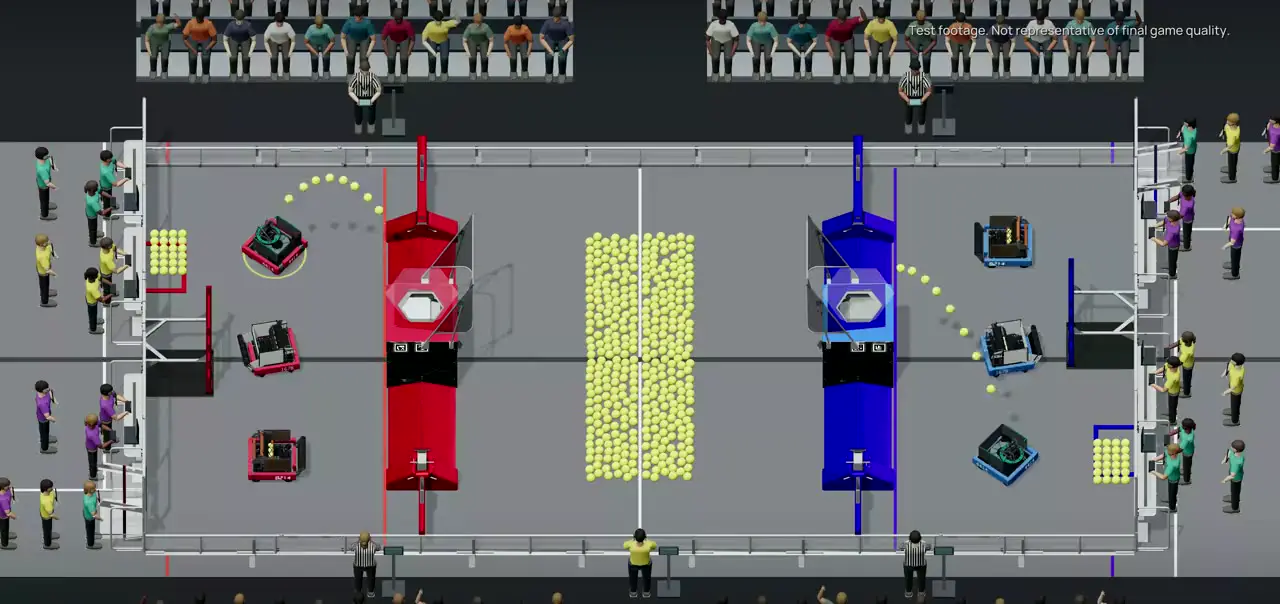
A robot-driving game.
A whole arena of decisions.
3DRoboticsGame design
External game · account required 满托 Lab
Stronger academics. Meaningful projects.
A university application with a story that’s yours.
Science, data, robotics, everyday problems.
Different interests open different doors.
A robot-driving game.
A whole arena of decisions.
A robotics arena you can enter from your browser.
Change a parameter. See the physics change.
Turn a content question into structured analysis.
Explore the systems behind investment research.
Give a physical storage problem a digital interface.
5 projects to explore
Step beyond a single project.
Visit the student’s own space.
 HARRY
HARRY

Learn to manage your workload, uncover gaps,
and build study habits that support your GPA.
Map assessments, deadlines and priorities. Make a plan you can follow and review.
Ask better questions, compare explanations and test what you think you know.
Gather and verify evidence for essays. Keep your argument and your voice.
Turn mistakes and teacher feedback into targeted practice and your next action.
List assessment dates, grade weights, unfinished work and available study time.
Compare priorities, identify the hardest gaps and propose a realistic sequence.
Check the plan against school requirements. Track completion and revise after feedback.
Nearly a decade of undergraduate-admissions experience.
Projects that reveal how you think, learn and build.














An interest, a problem you noticed, and a prototype that responds to it.
Design choices, experiments, iterations and your contribution.
Code, a working demonstration and a learning reflection — ready to discuss in your application.
Explore the right route for your age, location and project.
Build the work first; match the opportunity thoughtfully.
Research questions, original methods and evidence. Entry through an affiliated science fair.
Turn a problem into a prototype, explain its users and communicate its value.
Test a question, collect evidence and defend your findings to an audience.
Build modeling and technical-writing skills before competing; contest work is student-team independent.
An external research-award pathway with school or university mentors. Mainland rules exclude commercial coaching of submitted research reports.
Turn an idea into a working demo with a team. Explore high-school events in the Hack Club directory.
Opportunities are matched individually against each organizer’s current rules, including eligibility and AI use.
Learn to notice a problem, work with AI,
make decisions and test what you build.
You do not need to arrive with a complete idea. Bring a question, a frustration or a subject you love. We help turn it into a feasible prototype and a way of working with AI you can use again.
Start with your interests and a problem worth exploring.
Discuss the idea. Engineers assess feasibility. Confirm a clear project plan.
Work with AI and mentors across 18 teaching sessions. Test, revise, understand.
An open-source repository, a working presentation and a record of learning.
Learn to ask better questions,
make informed decisions and explain your own work.
Engineering and research mentors help you shape a question, test an idea and understand what you create. Learn from people with frontline experience at major technology companies.
Connect concepts to questions and worked examples.
Use relevant resources to check what AI tells you.
Build a study workflow around your own weak spots.
Our growing international-curriculum knowledge resources support this course-focused approach to learning with AI.
CUHK MMLab PhD · University of Pennsylvania postdoctoral researcher
Tongji Computer Science · Fudan Software Engineering
Shanghai Jiao Tong University · Huawei Cloud MVP
Bilibili gaming platform · Dewu trading-system architecture
2013–2017 · PwC New York
Investment Banking & Capital Markets
Associate → Assistant Manager
In 2017, exposure to a J.P. Morgan financial-contract AI review project offered an early view of AI in professional work.
Bring your courses, academic goals and interests.
We’ll shape a learning and project plan around you.
Standard project
Arduino, ESP32 or similar chips / boards
Start with an interest and the willingness to learn. We assess the idea, your starting point and a realistic project scope before the project plan is confirmed.
Identify the problem, make design choices, work with AI, test the prototype and explain the result. Mentors guide and engineers support delivery; the student’s contribution should be visible.
Your project plan sets milestones and a schedule for 18 guided teaching sessions. Each stage connects what you learn with what you build.
The target is a working product prototype with source code and an accessible presentation. Its specific functions and acceptance criteria are defined in the project plan.
Learn to map assessment priorities, diagnose gaps, review feedback and plan targeted practice. The goal is a repeatable learning process you can use across your own courses.
The process can create meaningful evidence of curiosity, decisions and technical contribution. Where appropriate, it may support portfolios, research supplements or competition preparation. Each route has its own requirements.
Yes. This showcase is public. Student websites open separately and may have their own access requirements; DriverLab currently needs a game account.
For students, parents and schools.
Scan with WeChat. On a phone, save the QR code and scan it from your photo album.
Save QR code ↓ Bingbing · 冰冰